Blog & Articles
How to Dial in Espresso for Perfect Extraction

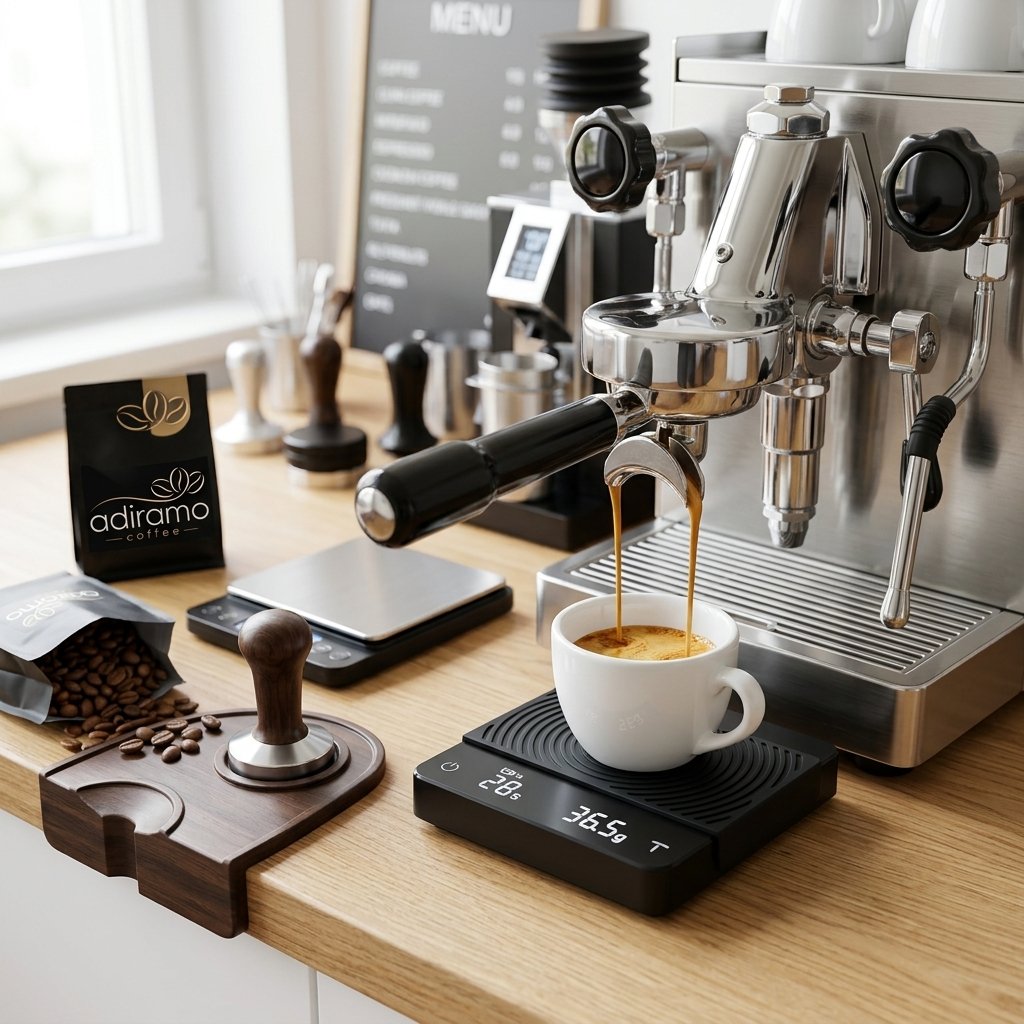
Dialing in espresso requires balancing three variables: dose, yield, and extraction time. Master this 4-step framework using fresh-roasted beans like Adiramo Signature Dark Roast Espresso to pull rich shots with thick crema every morning.
1. Core Parameters for Espresso Extraction
Target a 1:2 brew ratio as your starting baseline. For an 18 g dose of coffee in a double portafilter basket, aim for a 36 g yield in 25 to 30 seconds.
| Parameter | Standard Target | Under-Extracted (Sour) | Over-Extracted (Bitter) |
| Dose | 18.0 g | N/A | N/A |
| Yield | 36.0 g | > 40 g (Too high) | < 30 g (Too low) |
| Time | 27–30 sec | < 22 sec (Too fast) | > 35 sec (Too slow) |
| Water Temp | 93°C (200°F) | < 90°C (Too cool) | > 96°C (Too hot) |
| Flavor | Balanced, sweet, complex | Sharp sourness, thin body | Harsh bitterness, dry astringency |
2. Equipment Setup & Preparation
- Gram Scale: Use a precision digital scale accurate to 0.1 g.
- Fresh Whole Bean Coffee: Use beans rested 7–14 days post-roast, such as Adiramo Espresso Roast.
- Portafilter Basket: Match your dose to basket capacity (e.g., 18 g dose in an 18 g basket).
- Tamping Setup: Flat, level tamper with 30 lbs of firm pressure and a distribution tool (WDT).
3. Step-by-Step Guide to Dialing In
1.Establish Baseline Weight & Grind:Fix your dose size first.
Weigh 18.0 g of fresh coffee beans. Set your grinder to a medium-fine espresso setting (resembling table salt). Grind directly into a dry, clean portafilter basket.
2.Distribute & Tamp Level:Eliminate air pockets to prevent channeling.
Use a needle distribution tool (WDT) to break up clumps. Tamp level with ~30 lbs of force. Ensure the puck surface is flat; uneven tamping creates channel paths for water.
3.Time the Extraction:Start your timer when the pump begins.
Lock the portafilter into your group head, place your scale and cup underneath, and initiate the shot. Stop the timer and the pump the exact second your cup reaches a 36 g yield.
4.Evaluate Flavor & Adjust Grind:Only change ONE variable at a time.
- If < 25 seconds (Fast/Sour): Grind fine-tune finer. Finer grounds increase flow resistance, slowing extraction.
- If > 32 seconds (Slow/Bitter): Adjust grind coarser. Coarser grounds reduce resistance, speeding flow.
- Adjust in micro-clicks until your 36 g yield lands squarely in the 27 to 30 second window.
4. Flavor Diagnostics & Quick Adjustments
Diagnosing Extraction Errors
- Under-Extraction (Shot runs too fast): Coffee tastes salty, sharp, acidic, or hollow. The crema is light pale and dissipates rapidly.
- Fix: Keep dose constant (18 g) and adjust grind setting finer.
- Over-Extraction (Shot runs too slow): Coffee tastes harsh, astringent, charcoal-bitter, and leaves a dry coating on your tongue. Crema is dark brown with black edges.
- Fix: Keep dose constant (18 g) and adjust grind setting coarser.
- Channeling (Water shoots or spurts out unevenly): Causes combined sour and bitter notes.
- Fix: Focus on distribution before tamping; ensure zero side-gap gaps in the puck.
5. Dialing In FAQs
How often should I dial in my grinder?
Dial in every morning. As coffee beans age and lose moisture, they require slightly finer grind settings to maintain identical extraction times.
Why shouldn’t I change the dose weight to fix shot timing?
Changing the dose alters puck head-space and basket fill dynamics simultaneously. Fixing your dose at 18 g isolates grind size as the sole variable, simplifying troubleshooting.
Can I dial in espresso without a timer or scale?
Visual estimation leads to massive inconsistency. A digital scale with a built-in timer is essential to achieve reproducible shot quality.